
As a child, I always called them eggs. The word “roe” wasn’t part of my vocabulary then. They were eggs. My father introduced me to the yellow mass and when he saw how much I enjoyed them, he’d give his share to me. In time, all the fish eggs went to me since my brother did not care that much for them.
By the time I was old enough to tear a whole fish apart, finding fish eggs inside became a game. I’d pick up a fish and sort of make a wish by saying, “Sana may itlog… sana may itlog (I hope it has eggs… I hope it has eggs).” And actually finding sacs of eggs in the cavity was almost like… it was almost the same feeling when opening a birthday gift and finding beneath the wrapping something that I had been earnestly wishing for the entire year.
See, back then, I’d look for fish eggs in small fish. Large fish were not as common in the market then as they are now. The sacs were two inches or shorter and that made the fish eggs even more special. So small, so desirable, so treasured. I’d eat my fish first and save the eggs for last. For some reason, the anticipation made them even more delicious, the experience more exciting and the moment more special.
These days, fish eggs in their sacs are sold by the kilo as a stand-alone item. You have a 20-kilo tuna or salmon and you can just imagine how large the sacs are.
Why are they called fish roe?
Well, because they’re not exactly the same as eggs as we commonly know it. When we say egg, what comes to mind is something with a shell. Inside the shell is an embryo which, if left alone, will grow into the same animal which laid the egg. In other words, when the egg comes out of the mother’s body, it is already fertilized.
Fish roe is fish egg but it isn’t fertilized. Not yet, anyway. Fish roe is a bunch of unfertilized eggs and the sacs that encase them are the ovaries. That’s why fish roe come in a pair of sacs like attached twins — a fish has two ovaries.
The roe is released into the water where the unfertilized eggs wait for the sperm released into the water by the male fish to fertilize them. That’s how fish reproduce — by spawning. In the case of bony fish, the kind we eat, it’s called broadcast spawning. I didn’t know all that until I was already a mother with adult daughters.
So, to distinguish fish eggs from the fertilized eggs that we are all familiar with, there’s a special name for them — fish roe.
How is fish roe eaten?
There are four ways.
Cooked (sacs left in the fish cavity)
First of all, you don’t have to remove the eggs from the fish cavity (belly). The fish can be cooked whole with the egg sacs inside. And you eat the fish eggs just like fish flesh.
There is a prized for the amount of eggs in its cavity. It’s called shishamo in Japan.
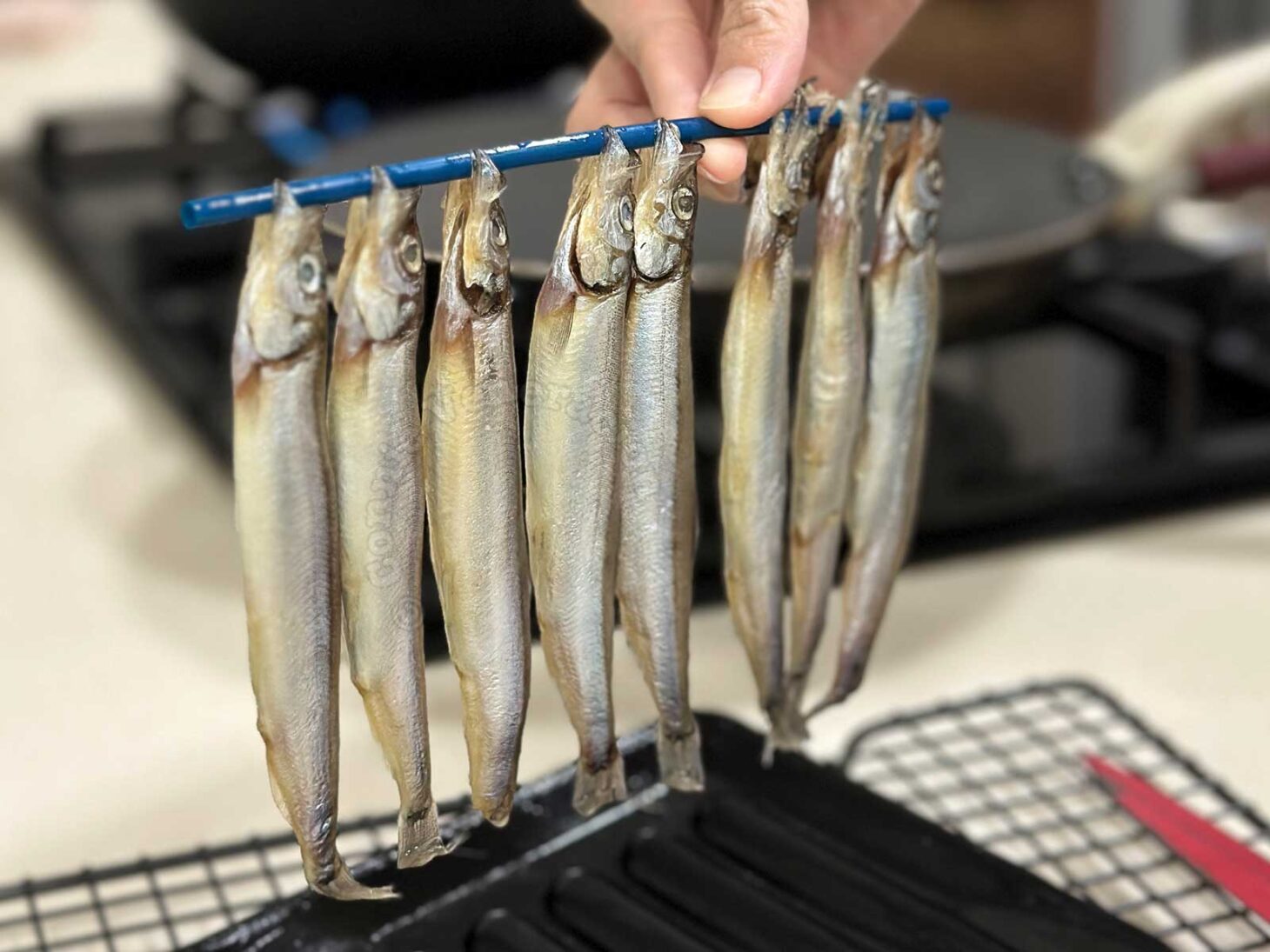
Shishamo belongs to the smelt family and native to Hokkaido, Japan. It’s silver and white, and the average length is around six inches.
Rinse the fish and pat dry with a kitchen towel. If you’re intimidated with the heads, cut them off. But, really, shishamo is so small, the bones are so soft and, after frying, everything is edible.
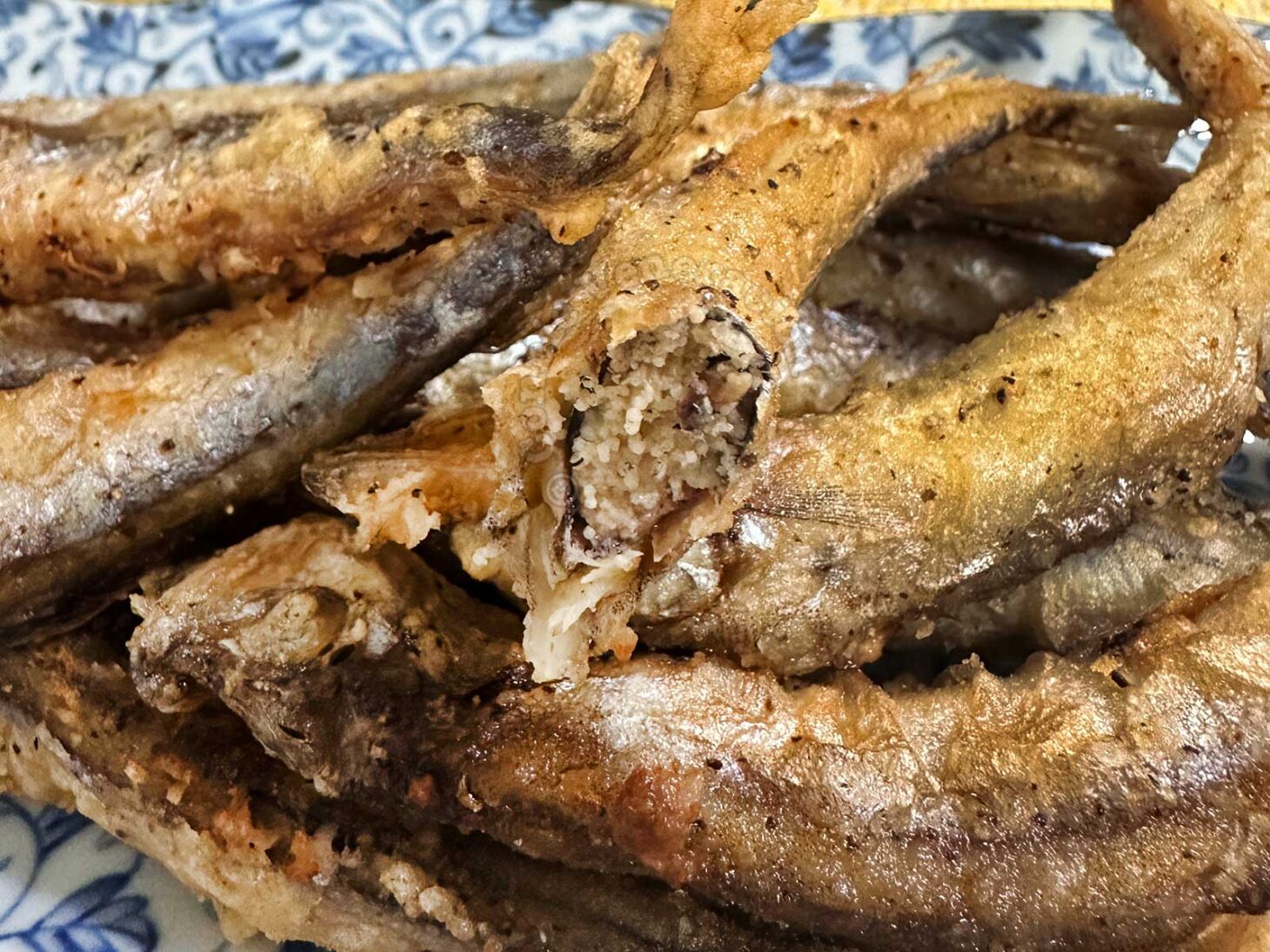
Season the fish lightly with salt and pepper, with or without the heads, then toss in potato starch and fry. Serve immediately and enjoy the all the fish eggs in their cavity.
Cooked (sacs removed from the fish cavity)
Fry them, grill them, poach them, steam them, stew them… Fish eggs in their sacs can be cooked by any method like any other part of a fish.
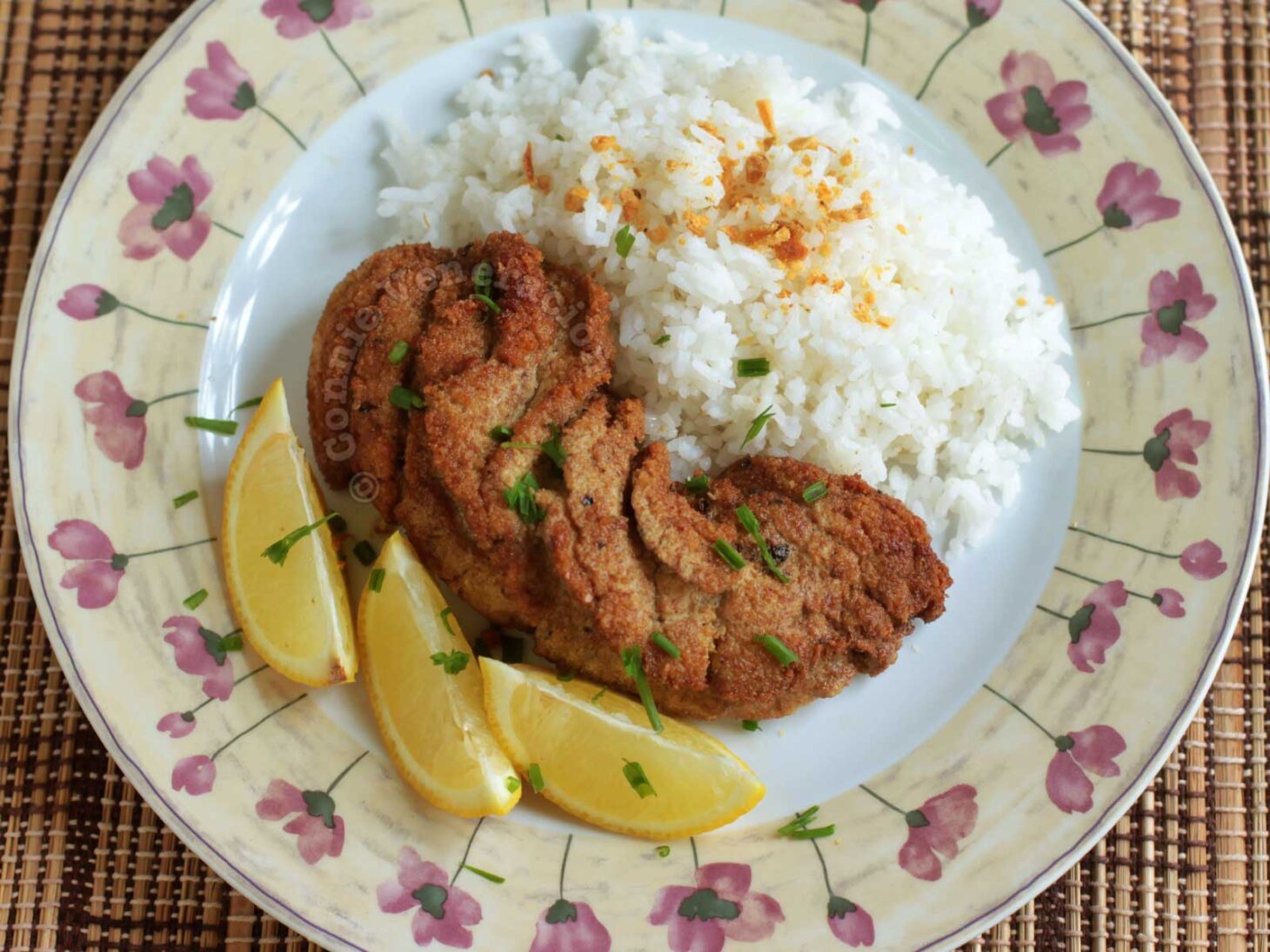
Personally, I find that frying is the easiest method. I split a sac vertically into two portions. I season the fish eggs with salt and pepper, and then fry them in the sac, cut side down, in about two inches of very, very, very hot oil for less then three minutes — just long enough to brown the surface and make it crisp but leaving the inside barely cooked through. On the plate, I squeeze a little lemon juice over them and serve them with rice topped with toasted garlic.
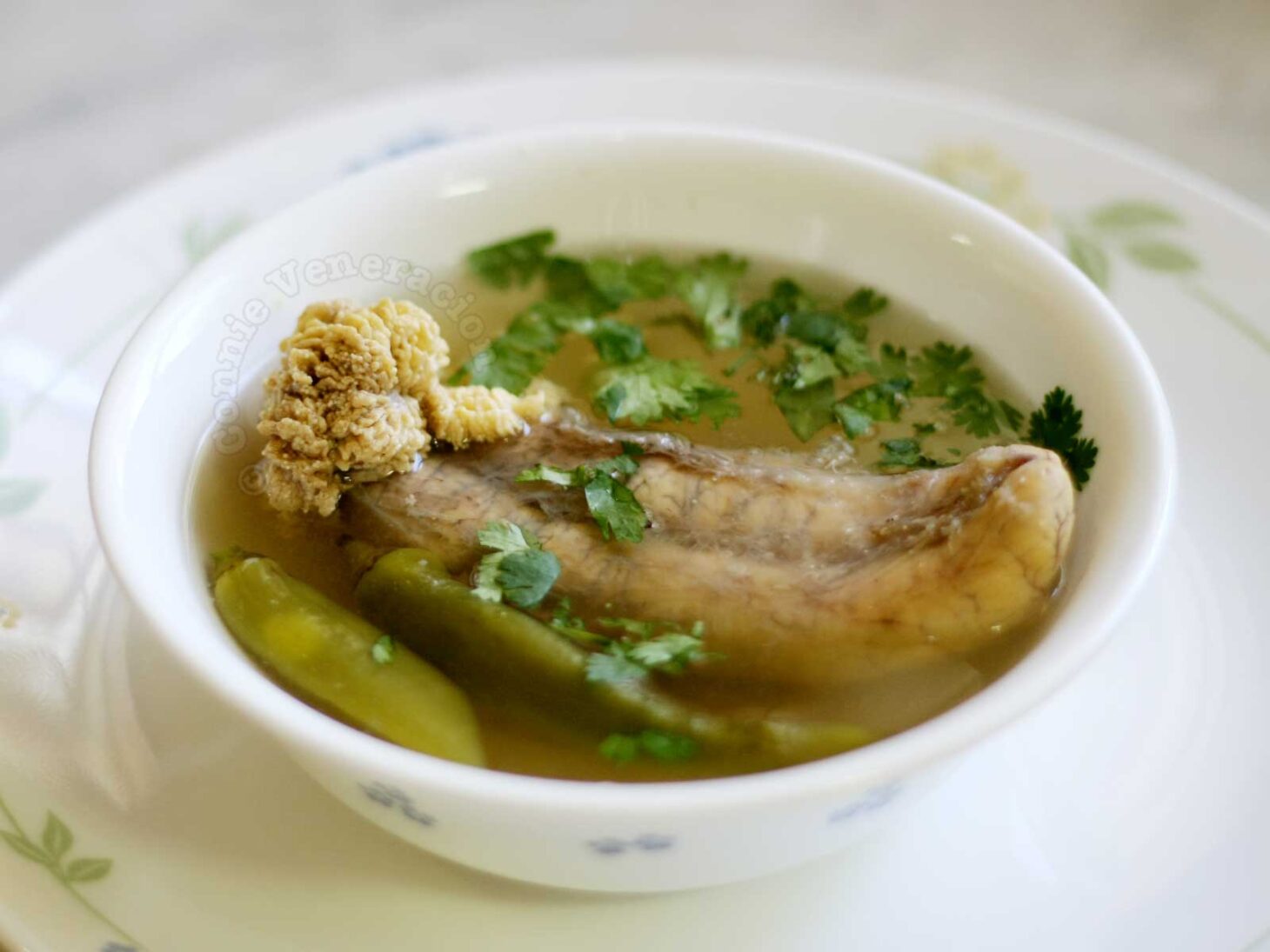
I also cook fish egg soup in, oh, so many ways. In the photo above, two sacs were poached in fish broth with ginger and chilies, and garnished simply with torn cilantro.
Raw (eggs removed from the sacs)
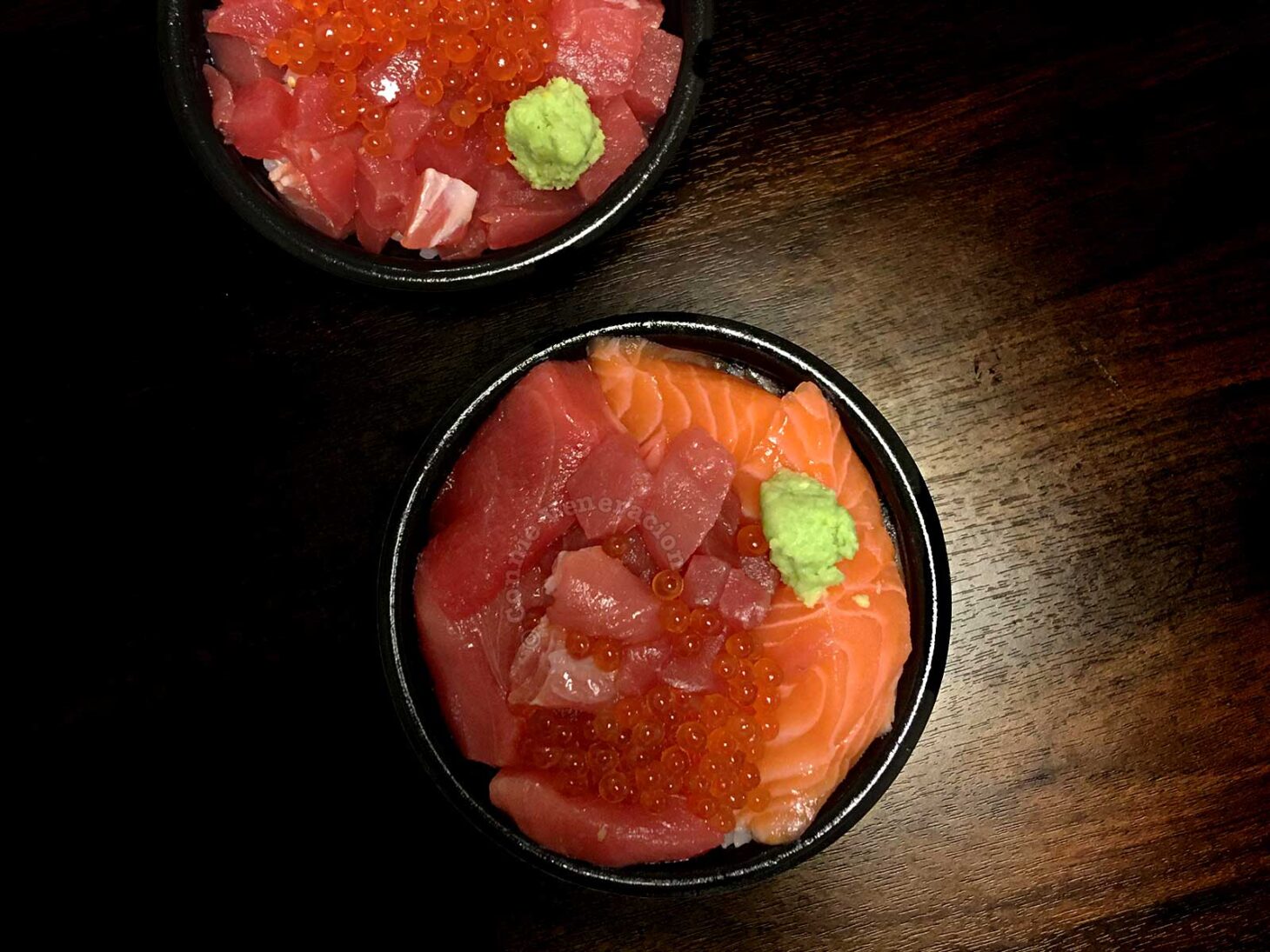
In Japanese cuisine, the eggs are removed from the sacs and eaten raw. You’ve seen them in your sushi or in your donburi — black or orange (and, occasionally, yellow or green) spheres, small as pinheads or large as peas, that burst in your mouth when your teeth crush them.
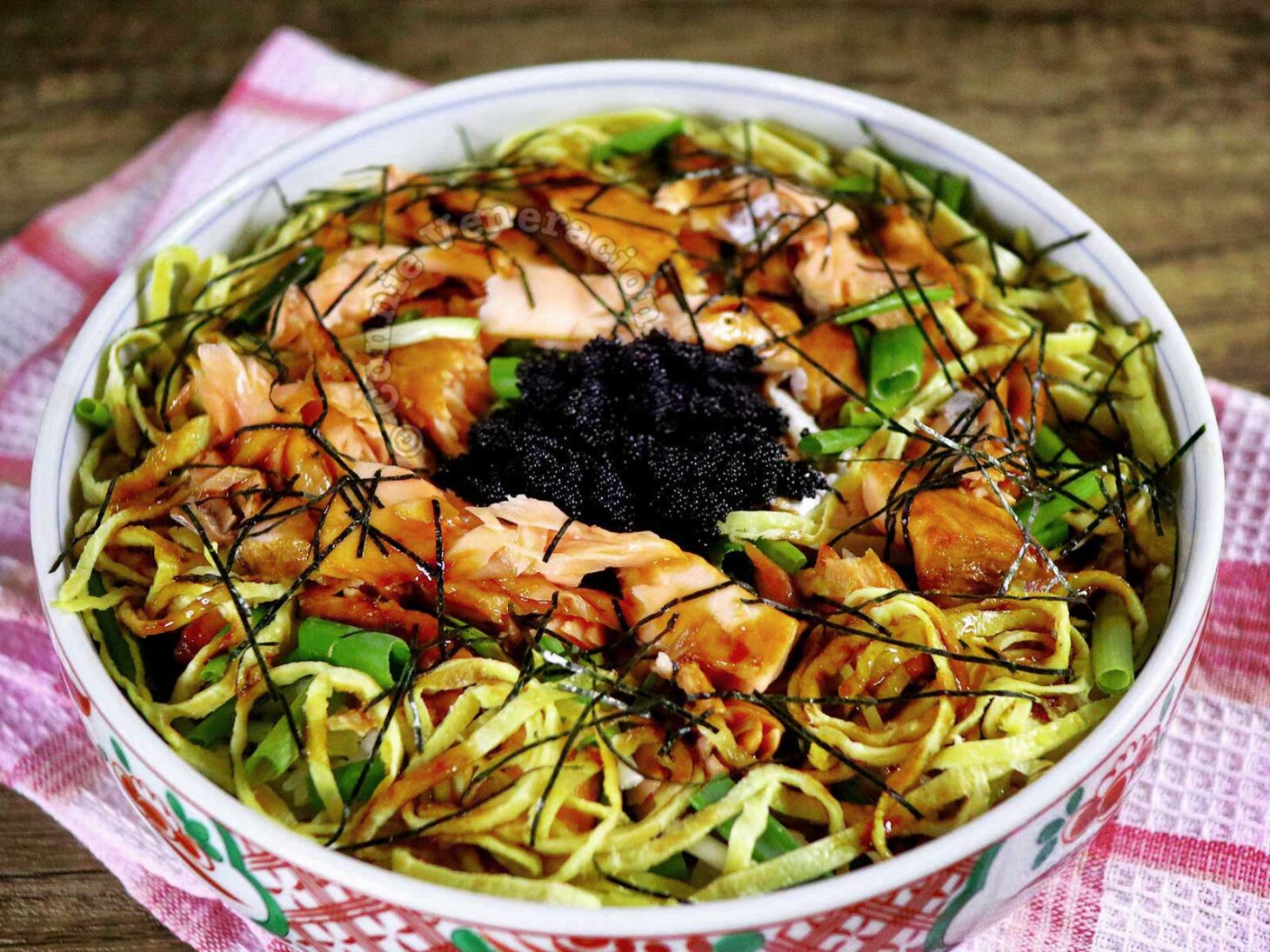
The size of each sphere depends on what fish the roe came from. Fish eggs come in their natural color or they may be tinted — with squid ink to make them black, with yuzu (a citrus) to turn them yellow or with wasabi to give them a greenish hue and a spicy kick.
Preserved
There are two ways to preserve fish eggs. Both involve curing with salt.
Cured raw eggs as in the case of caviar.
Caviar is fish eggs traditionally from wild sturgeons (Acipenseriformes). Beluga, Ossetra and Sevruga are sturgeons. Today, however, eggs of other fish, including salmon, are made into caviar although there are regulations (some by law) that say caviar can only come from sturgeon. Whichever fish the eggs come from, the eggs are released from their sacs and undergo a salt-curing process both for flavor and preservation. It is this process that turns fish roe into caviar.
Salted and dried
Outside Asia, bottarga is the name of salted dried fish eggs in their sac. Despite the Italian-sounding name, it was the Phoenicians (people of an ancient maritime empire in what is primarily modern-day Lebanon) who first dried salted fish eggs in their sacs. The practice spread to Egypt and, from there, to Europe with the spread of the Byzantine Empire, and then back to Asia.
In Japan and Korea, dried salted mullet eggs in their sac are known as karasumi and eoran, respectively. This delicacy is also found in Taiwan.
In Sarawak, Malaysia, terubuk (Tenualosa toli) eggs are sold salted and dried.
Discover more from Connie Veneracion
Subscribe to get the latest posts sent to your email.

 Panipuri: mid-afternoon snack