
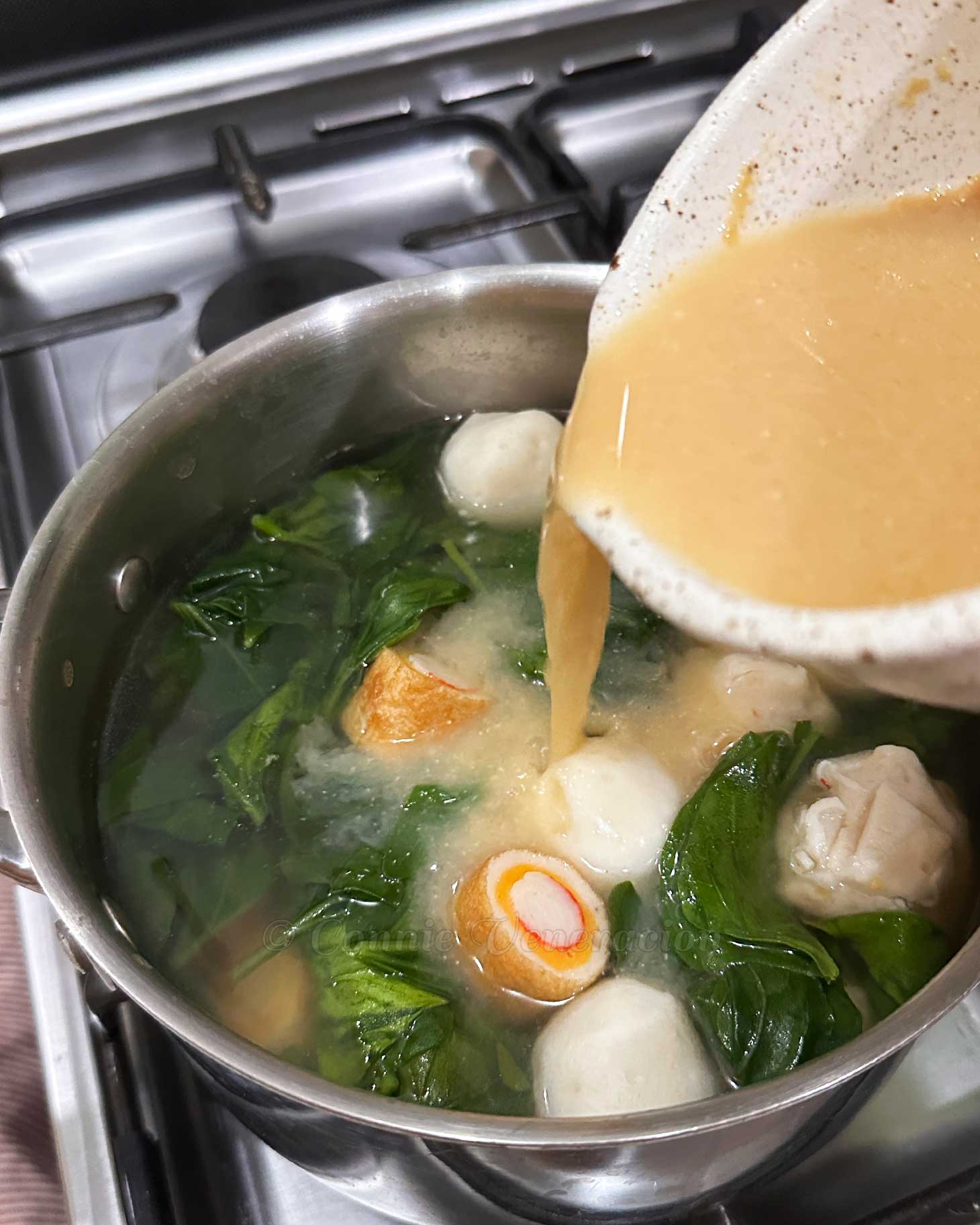
If a recipe calls for white miso and you need to get it from the grocery, don’t go looking for a white paste in a tub or pouch. That’s white miso paste thinned down with hot water in the photo above. Obviously, it isn’t white. Not even off-white. Or milky white. Or dirty white. It’s beige — a word originally used to describe the color of unbleached wool.
Why then is it called white miso? The Japanese call it shiromiso and “shiro” means white. Perhaps, the better description whould be pale because among the three general classifications of miso — white, red and brown — it is the lightest in color and also the mildest in flavor.
While white miso is ideal for making miso soup, other dishes require the stronger flavor of red or brown miso.
How is white miso used to make miso soup?
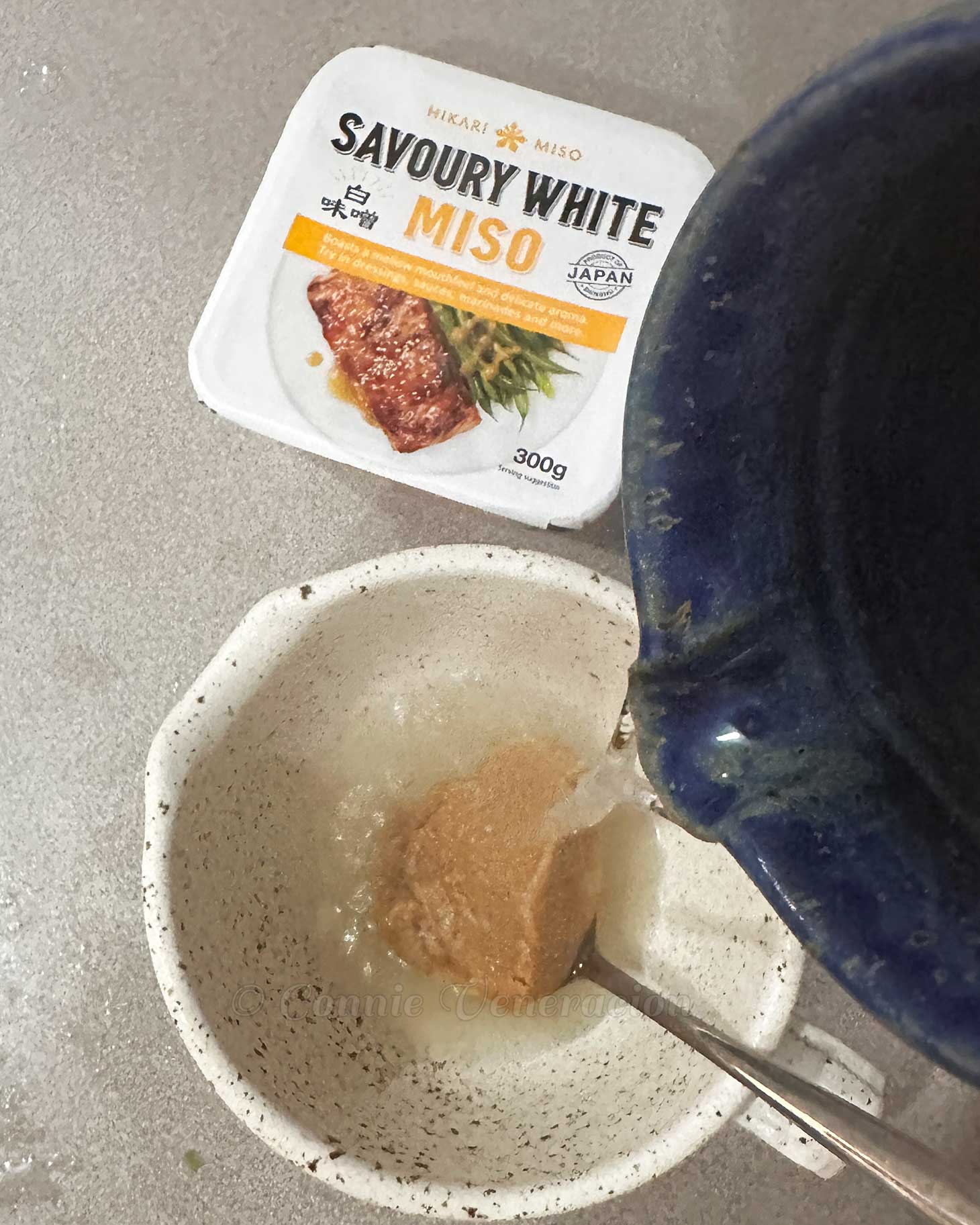
It’s a paste so you can’t directly drop a spoonful into hot broth. You have to thin it out to make it pourable. Drop the paste into a heatproof bowl, pour in hot water and whisk until the paste dissolves and liquefies. Then, pour into the pot with the heat off. You’re really not supposed to boil miso because the flavor will degrade. Instead of umami, you’ll get flat salty.
Discover more from Connie Veneracion
Subscribe to get the latest posts sent to your email.

 Breakfast is the most important meal? It’s a lie.