
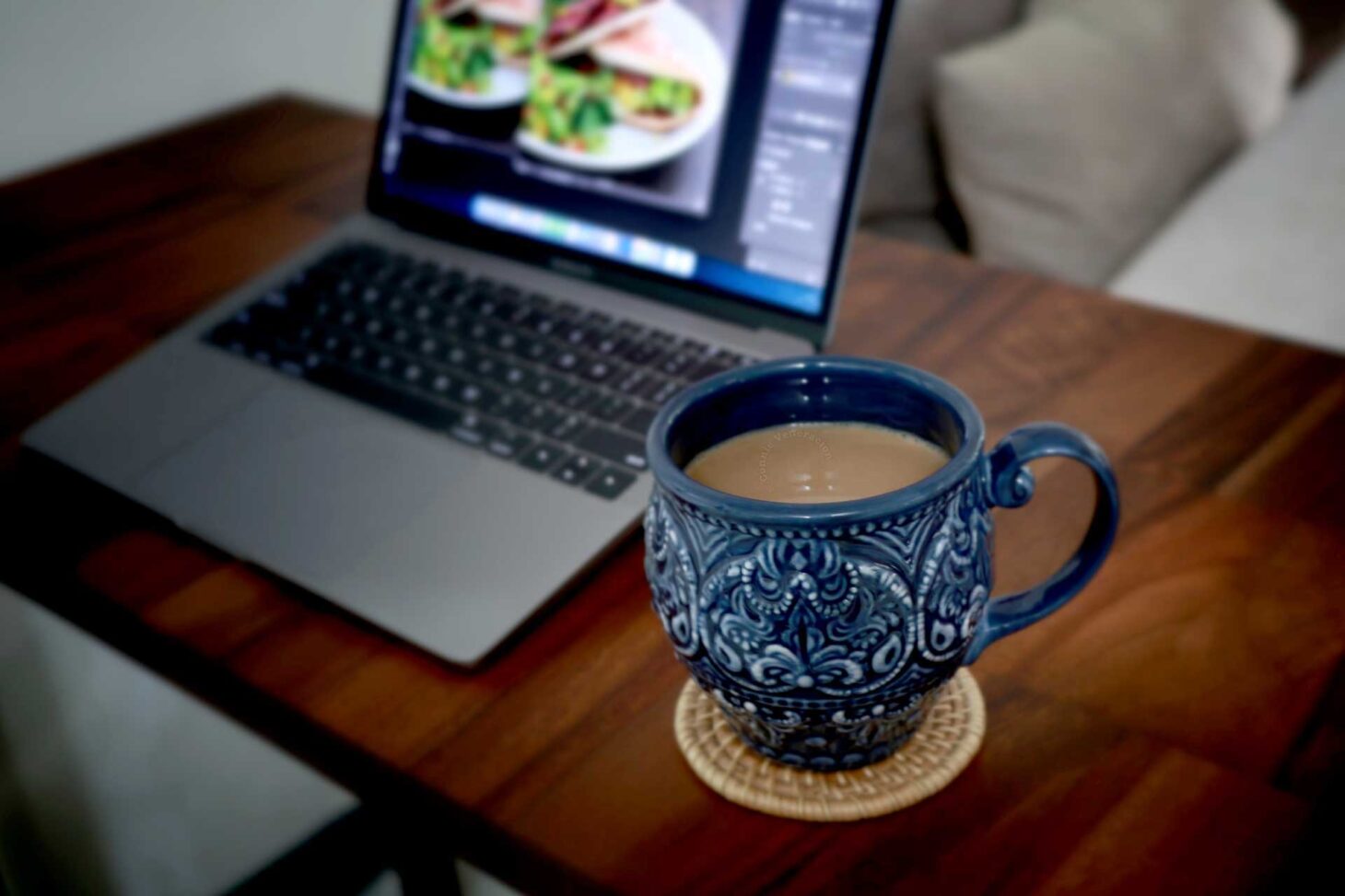
It’s the first thing I fix for myself when I get out of bed. A cup of freshly brewed coffee. It’s my stimulant. Without it, I feel lethargic. So, coffee first with a bit of light reading. The day’s news, mostly. Solid food comes after.
I wasn’t always a coffee drinker. In grade school, I remember having hot cocoa in the morning. In college, it was loose leaf tea. It wasn’t until I was in law school that I started consuming copious amounts of coffee. In time, coffee drinking became an obsession. It wasn’t just about drinking coffee to get a boost — it was as much about consuming good coffee.
First, coffee trivia that still make me giggle
Coffee used to be called Satan’s drink. It’s true. Drinking wine was associated with Jesus while coffee was a drink popular in the Arab world.
The first documentation of coffee appeared in the 11th century. At the time, the plant was called bunn and the drink made from its beans was buncham. Even then, it was already known as a stimulant.
Where did coffee come from?
While most authors agree that coffee was first drank in Ethiopia, it was in Yemen where it began to be cultivated — for religious purposes. Coffee was drank in Sufi monasteries for stimulation during prayer.
From Yemen, coffee spread to the Arab countries where drinking wine was banned. By the mid-500’s, the Arab world was completely enamored of the stimulating effects of coffee that coffee houses opened in Cairo, Syria, Aleppo and Istanbul.
So, you have Christians drinking wine while the Muslims were drinking coffee for the same reason — to experience altered states. In the Arab world, not everyone was happy with the coffee craze as some likened the effects with consuming alcohol. During the rule of Sultan Murad IV in the Ottoman Empire, drinking coffee was a capital offense.
As coffee drinking spread across Europe, Catholic priests were up in arms. Citing Coffee: The Revolutionary Drink for Pleasure and Health, Grandmotherafrica.com observes:
The logic was convoluted. As the book explains, these Christian priests in Europe believed that ‘Muslims worshiped the devil and that the devil forbade his followers from drinking wine, as that drink was reserved for those who followed Jesus. So the devil provided coffee, instead.’
And then the squabble caught the attention of an extremely influential man.
How coffee reached the homes of Catholics
The docuseries, Metropolis (on Netflix), claims:
Drinking Satan’s drink became such a controversy Pope Clement VIII had to intervene. His infallible palate would decide coffee’s fate once and for all. According to legend, he declared, ‘This devil’s drink is delicious. We should cheat the devil by baptizing it.’ With his blessing, coffee quickly spread throughout Europe and eventually the world.
Not that I agree with the how. But I won’t argue with the result. Otherwise, coffee might never have reached the Philippines, a staunchly Catholic country. And that would have been sad because coffee is the drink that I cannot live without.
How do we make coffee at home?
We’ve had our love affair with the stovetop percolator, the electric coffee maker and the French press. But we discovered that the most low tech brewing method yields the best cup of coffee.
Pourover coffee has been our default since 2018. It began when my brother’s family gave us pourover coffee drips for Christmas. We have acquired more drips since.
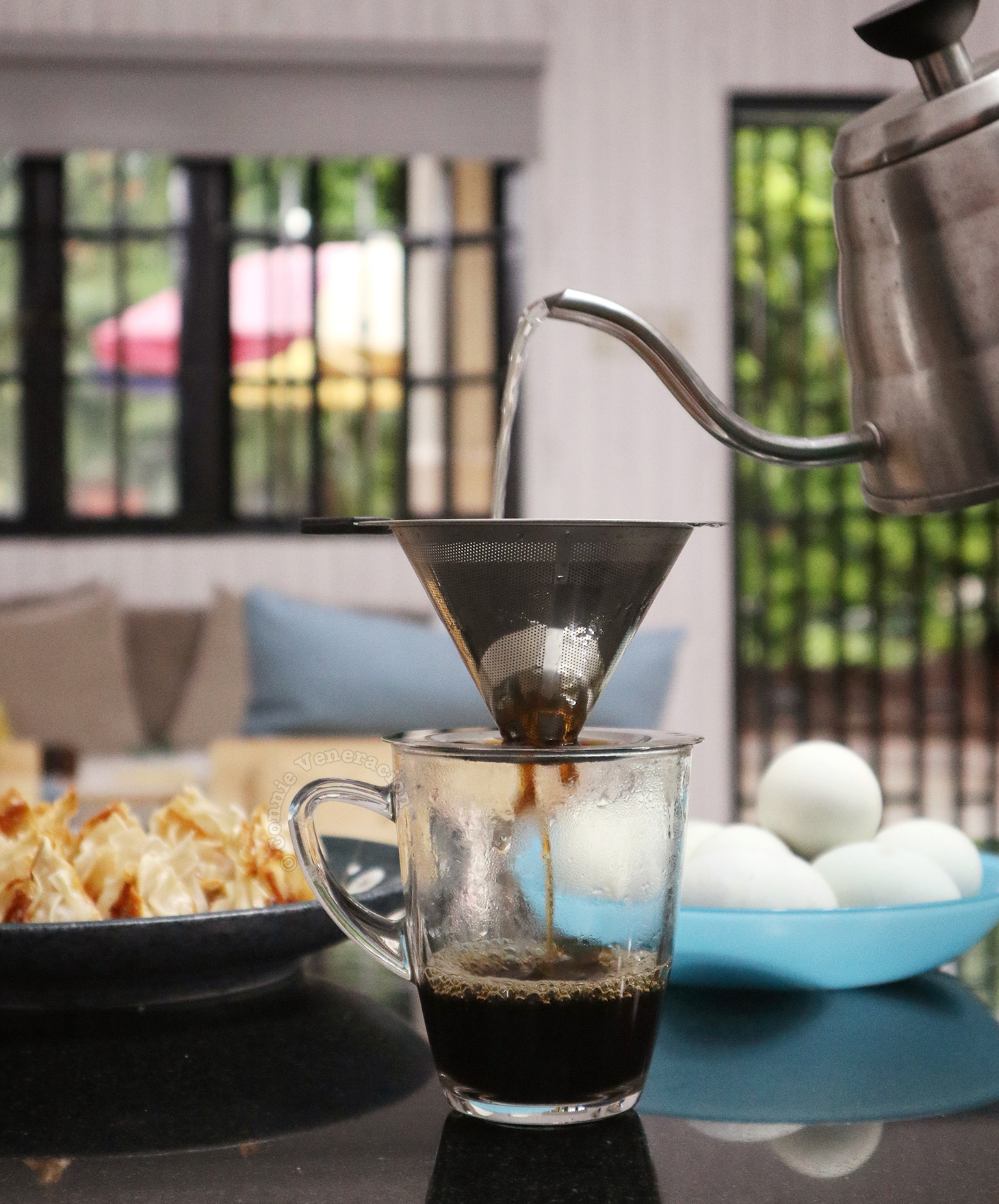
What’s so special about the pourover method? The flavor. Can you imagine enjoying a very strong brew with very little bitterness? Oh. My. Goodness. It’s the most wonderful coffee experience!
What makes pourover coffee less bitter than other strong brews? The absence of pressing. With most espresso machines and even the French press, you press the ground coffee prior to pouring the brew into a cup. I never imagined until we switched to the pourover method that it is the pressing that is responsible for so much of the bitterness.
At home, we start by grinding coffee beans which we buy whole. Why not buy ground coffee? Because coffee beans lose their flavor and aroma fast once they are ground. It doesn’t matter if you keep ground coffee in an airtight container. It will go bland fast because it has already been ground. Oxidation.
So, what we do is buy whole coffee beans and grind just enough for a day’s need. We have a manual grinder and an electric grinder. We grind just enough beans for one day so our coffee is always fresh.
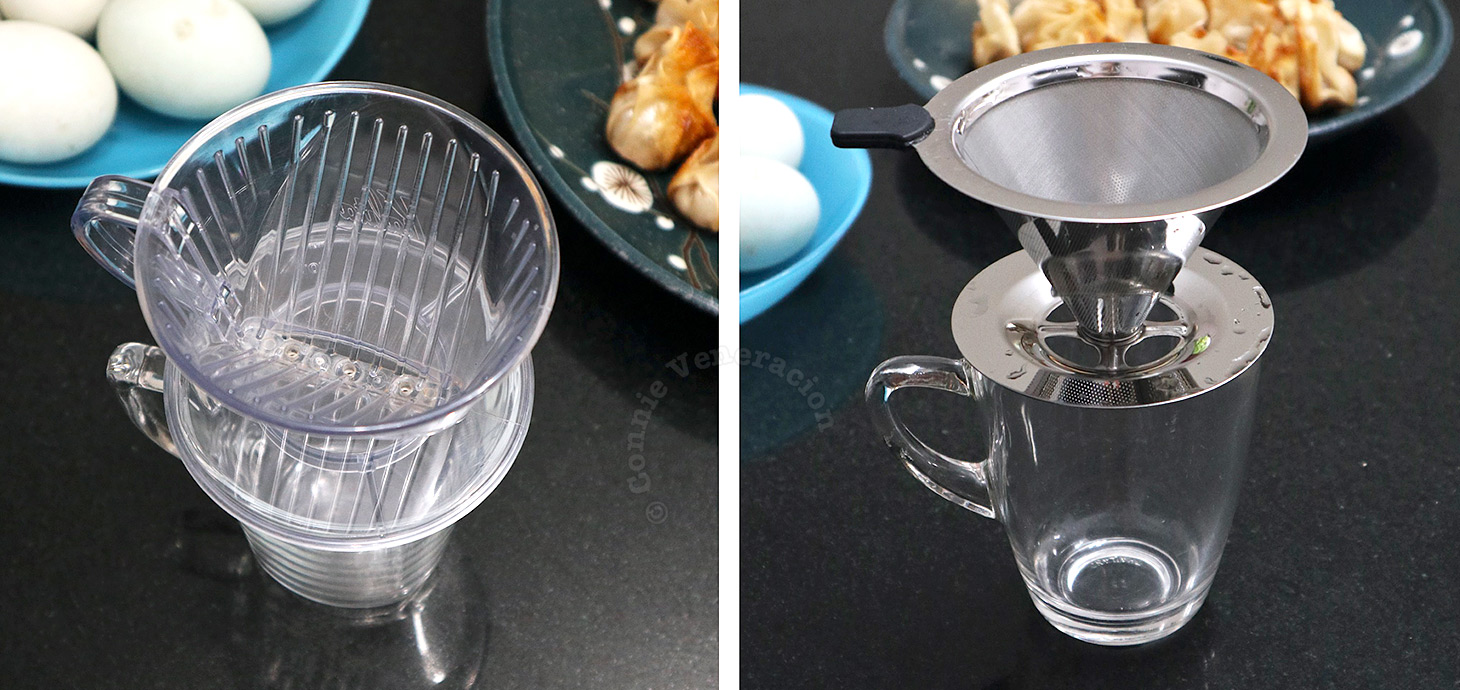
The freshly ground coffee is measured and dumped into the drip. A coffee drip is a conical cup roughly the size of a small coffee mug with holes at the bottom.
There are two kinds of pourover coffee drip that I have come across. The kind that requires the insertion of a paper filter and the kind that does not. We have both.
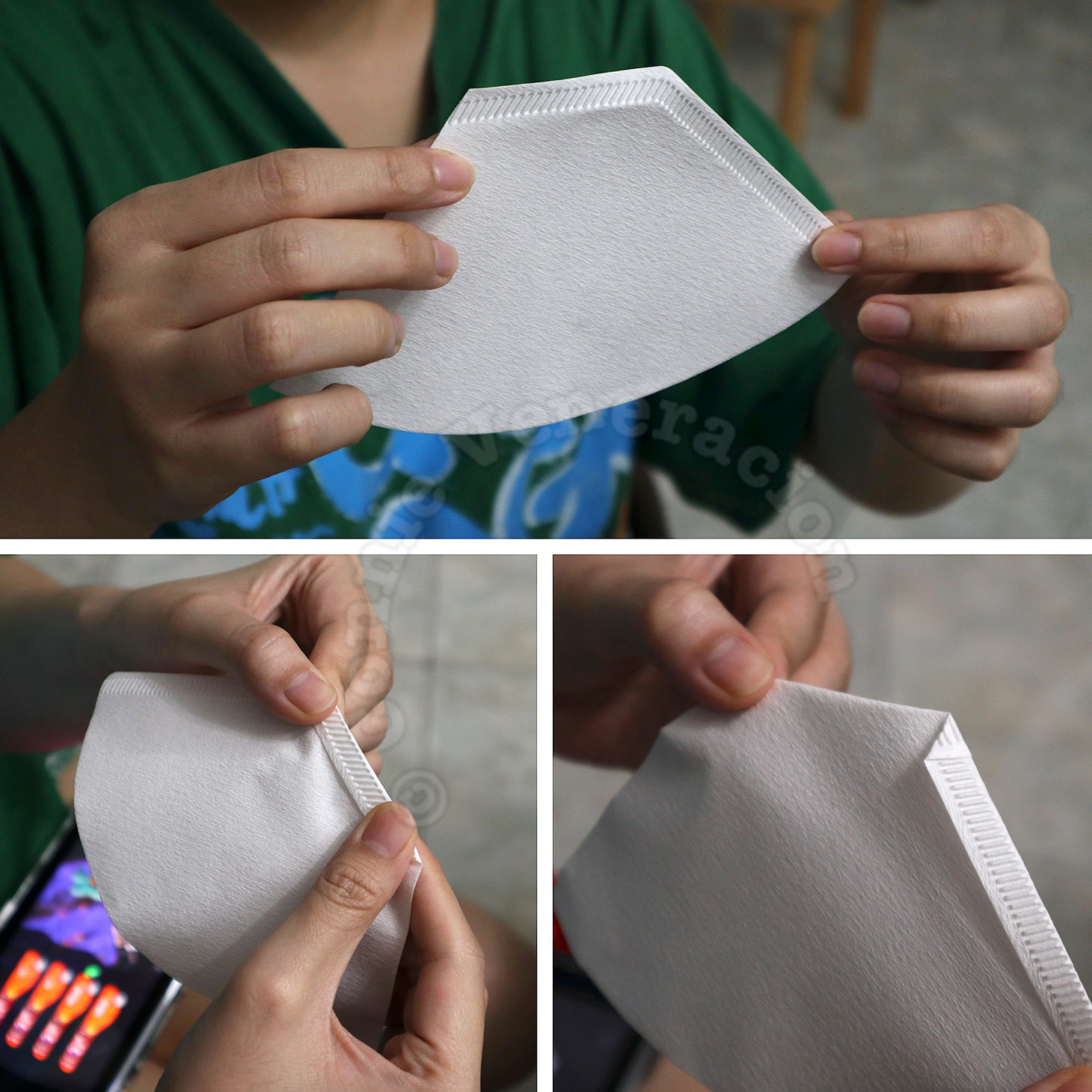
Paper coffee filter comes in different sizes. But they all have two ridged seamed edges. To make sure that the filter will fit snugly into the drip, those ridged seamed edges need to be folded. Start by folding the bottom. Turn the paper filter over then fold in the side going toward the opposite direction.
We were fine with the coffee drip that needs paper filter until we started having problems sourcing paper filters during the pandemic when it became a headache to source a lot of things. So, we bought the reusable kind. Use, wash and rinse, and reuse.
Whether using a drip with paper filter or the kind that doesn’t need a paper filter, the coffee making process is the same. We just position the drip over the coffee mug or cup. The wide mouth allows water to be poured over the ground coffee then drip through the holes and into the cup.
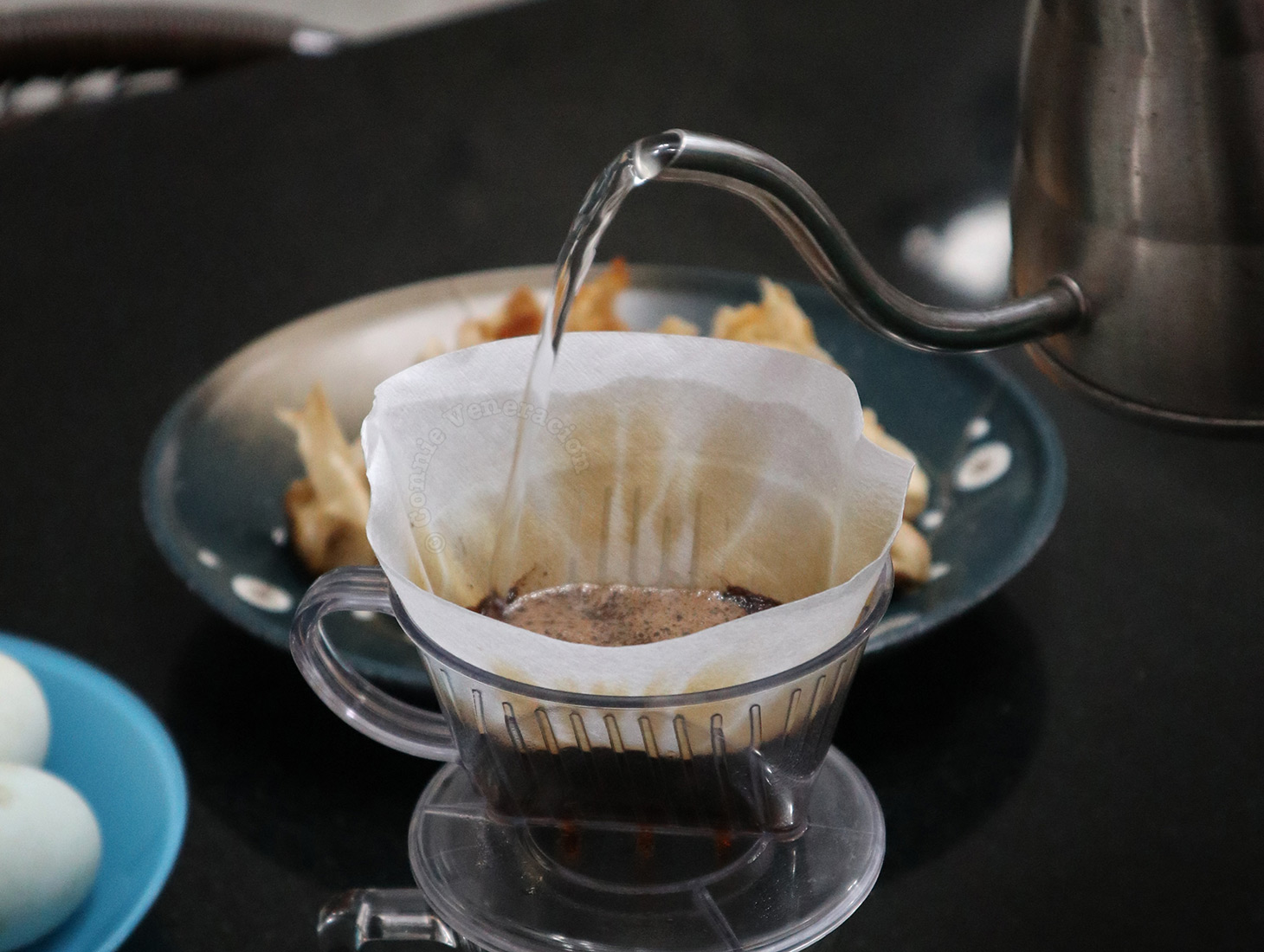
A gooseneck kettle is useful. It’s not really a must for making pourover coffee but a full-sized kettle is heavy and the spout is wider. Meanwhile, a goodneck kettle is much lighter and the spout is really narrow. It’s a great convenience as it allows better control to slowly pour water over the entire surface of the ground coffee.
But it’s not just a matter of pouring. There’s an art to the whole thing. It’s something we learned when my younger daughter, Alex, and I attended a coffee-making class in Ho Chi Minh City.
See, in Vietnam, the pourover method is the default way to make coffee. The drip, called phin, isn’t conical though. Rather, it has a flat bottom with holes. It is placed on a small disc that’s also filled with holes, and the pair is positioned over the coffee cup.
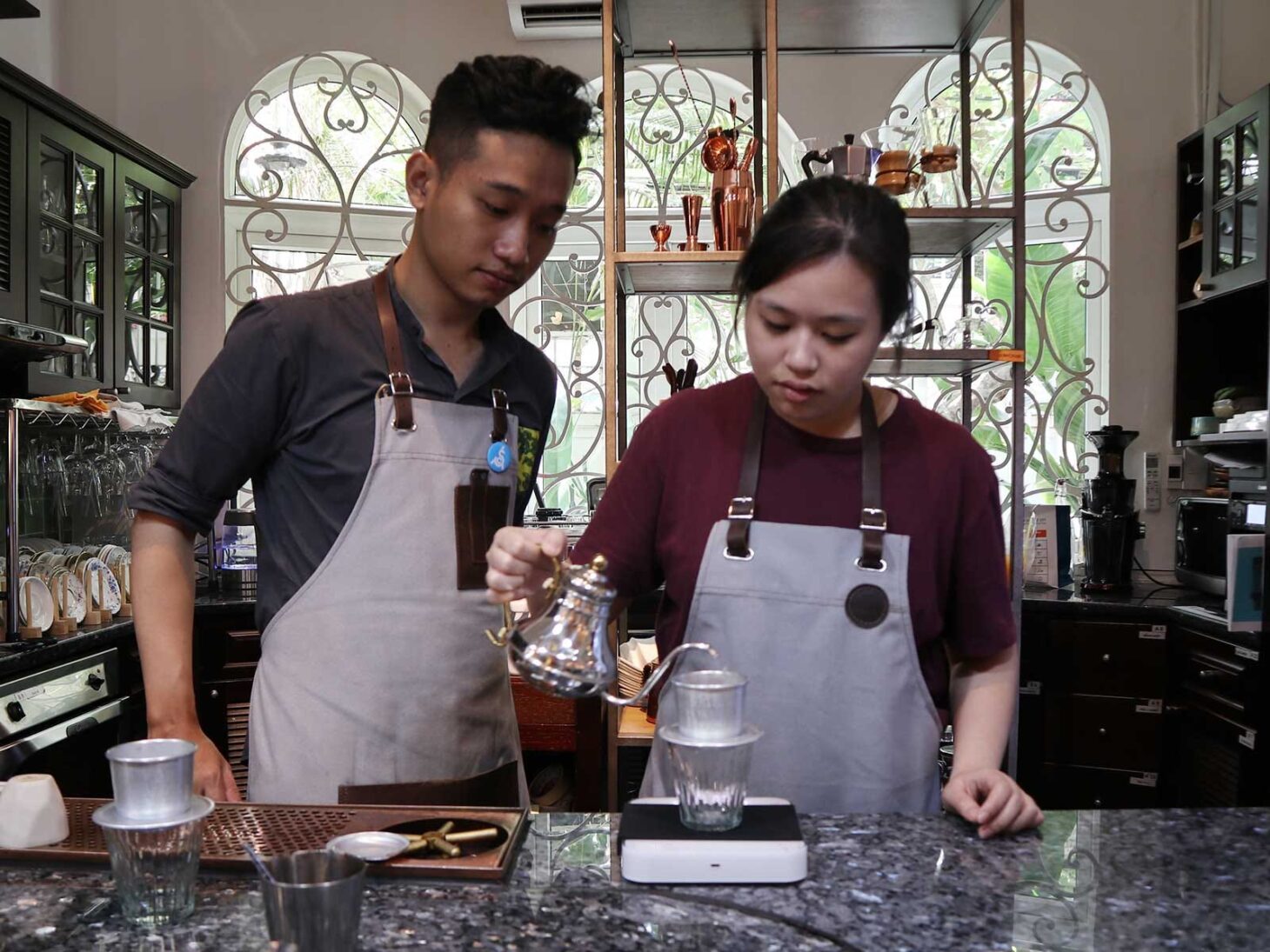
So, during the class, we learned about “bloom pour”. First, hot water is poured over the drip and cup to warm them up. The water is discarded and coffee is dumped into the drip. Once the ground coffee is in the drip, water is slowly poured over the entire surface of the coffee and left for half a minute to “bloom”. When the 30 seconds are up, the water pouring begins again. We pour just enough to cover the ground coffee then stop. We wait for the water to drip into the cup underneath where it has transformed into coffee. The process is repeated until there’s enough coffee in the cup.
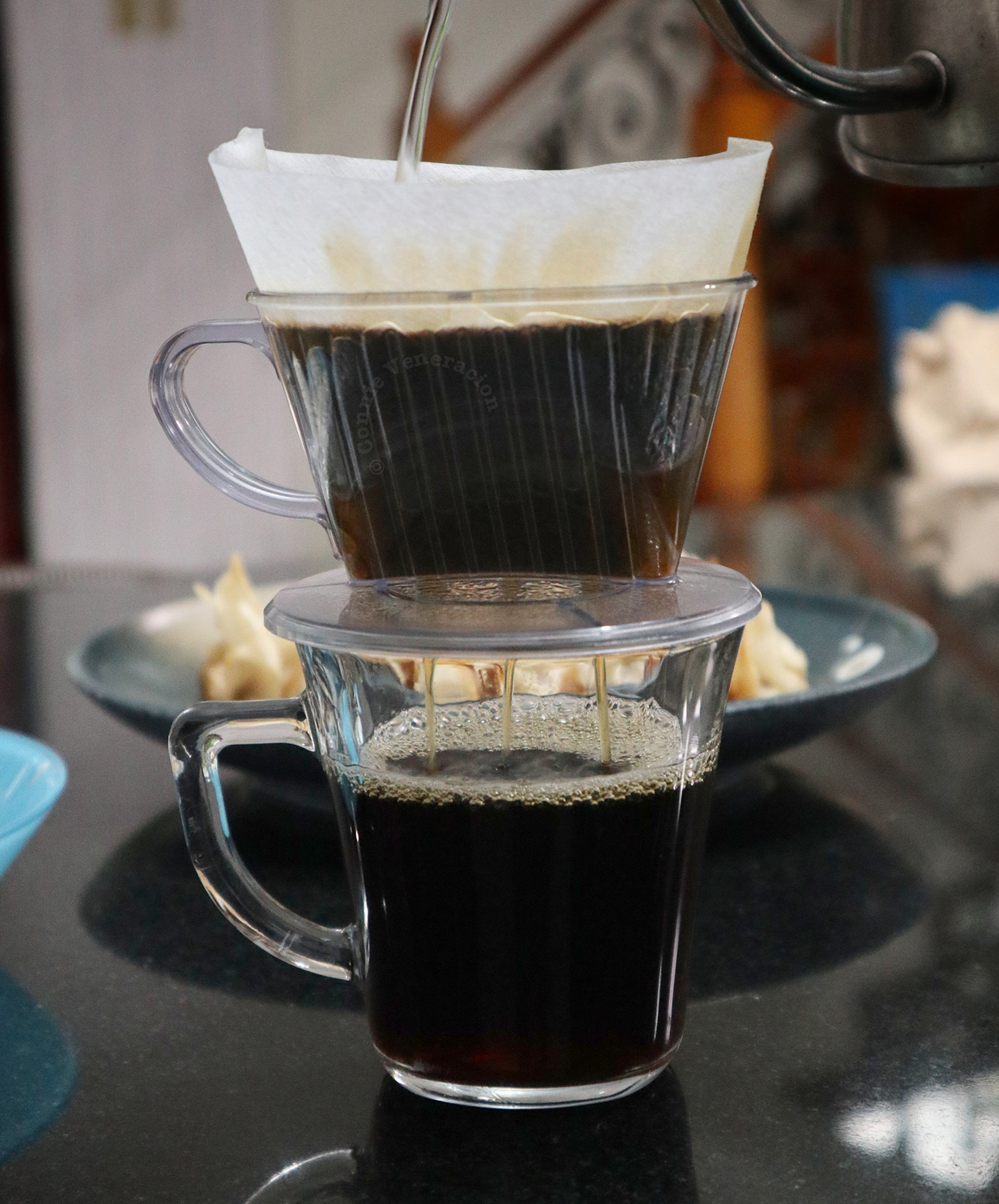
That’s how we have been making coffee at home since. Although we own more phins than I can count, we have become more comfortable with the conical drip.
So, there. Never mind those pricey electric coffee machines. The Vietnamese have perfected the pourover method and we’re sticking to it.
Discover more from Connie Veneracion
Subscribe to get the latest posts sent to your email.

 Bland butter? Spice it up.